
Key Benefits
- Dual-purpose design (HW-BI) — single needle type for both IV injection and blood collection — simplifies consumable inventory and workflow
- Closed-system collection — capillary action draws blood in a closed system, protecting sample integrity and minimising contamination
- Ultra-sharp 25G tip — minimises tissue damage and animal distress during tail vein procedures
- Training-compatible — designed to pair with Humaneway Tail Vein Simulators for technique training before live animal procedures
Overview
Humaneway laboratory needles are purpose-designed for the two most common rodent tail vein procedures: intravenous injection and blood collection. Two models are available — the HW-BI dual-purpose winged needle (injection and blood collection, 100 per set) and the HW-BS blood collection needle (blood collection only, 50 per set). Both use 25-gauge ultra-sharp construction to minimise tissue trauma and discomfort.
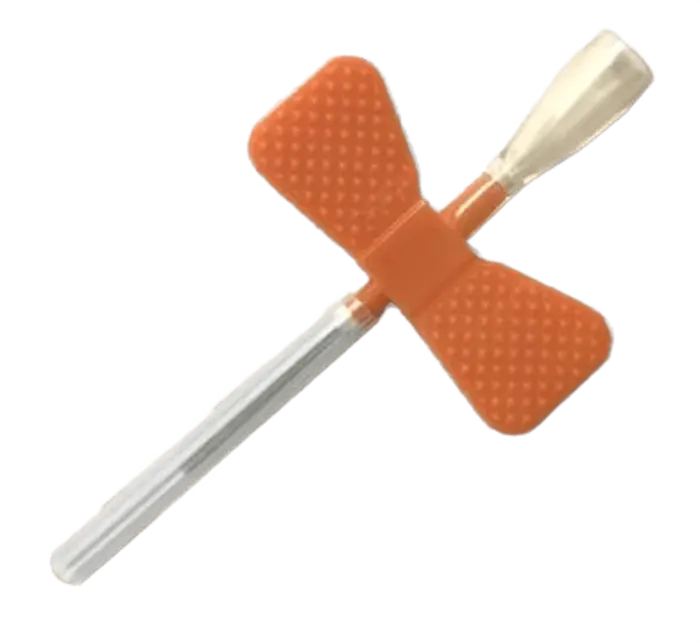
The winged (butterfly) design of the HW-BI provides tactile control and stabilisation during tail vein procedures, while closed-system capillary action collection protects sample integrity and eliminates contamination risk. Both needle types are fully compatible with Humaneway Rodent Restraint Devices and Tail Vein Simulators, making them a natural part of a complete rodent IV procedure and training workflow.
Key Features
- HW-BI: winged (butterfly) 25G needle — dual-purpose injection and blood collection, 100 per set
- HW-BS: 25G needle — blood collection only via 1.8 mm capillary tubes, 50 per set
- Closed-system capillary action collection protects sample quality
- Ultra-sharp tip construction minimises tissue trauma
- Winged design (HW-BI) for tactile control and stabilisation
- Compatible with any size capillary tube or standard syringe (HW-BI)
- Designed to pair with Humaneway Tail Vein Simulators for training workflows
- Disposable single-use for sterility
Typical Applications
- Intravenous injection via tail vein in mice and rats
- Tail vein blood collection for pharmacokinetic sampling
- Drug dosing in preclinical rodent studies
- Training on Humaneway Tail Vein Simulators
- GLP and non-GLP preclinical research
Specifications
| Gauge | 25G |
|---|---|
| HW-BI quantity | 100 disposable needles per set |
| HW-BI use | Injection and blood collection (winged design) |
| HW-BS quantity | 50 disposable needles per set |
| HW-BS use | Blood collection only |
| HW-BS capillary compatibility | 1.8 mm (±0.1 mm) capillary tubes |
| Collection method | Closed-system capillary action |
Which needle set do you need?
Humaneway offers two disposable 25G needle sets for rodent tail vein procedures. Choose based on whether you need injection capability or blood collection only.
- Winged (butterfly) design for tactile control and stabilisation during tail vein access
- Dual-purpose: use for both IV injection and blood collection with a single needle type
- Compatible with any size capillary tube or standard luer syringe
- 100 disposable needles per set
- Dedicated blood collection needle — draws into 1.8 mm capillary tubes via closed-system capillary action
- Optimised for pharmacokinetic sampling and serial blood collection
- Closed-system design protects sample integrity and minimises contamination
- 50 disposable needles per set
Not sure which needle set suits your protocol? Contact Walker Scientific — we’ll help you choose the right option for your species, procedure, and study design.
Frequently Asked Questions
What is the difference between the HW-BI and HW-BS needle sets?
The HW-BI is a dual-purpose winged (butterfly) needle for both IV injection and blood collection (100 per set). The HW-BS is a blood collection-only needle that draws into 1.8 mm capillary tubes (50 per set). The HW-BI's winged design provides additional handling control during tail vein procedures.
Can these needles be used with the Humaneway Tail Vein Simulators for training?
Yes. The Humaneway needle range is designed to pair with the Humaneway Tail Vein Simulators. Researchers can practise insertion technique, tactile feedback, and correct needle placement on the simulator before transitioning to live animals.
What is closed-system capillary action collection?
Blood is drawn into the collection tube by capillary action within a closed system rather than an open draw. This protects sample integrity, reduces contamination risk, and minimises stress on the animal during the procedure.
Related Products
Related Articles
Ready to discuss the Humaneway Needles?
Talk to our team about specifications, pricing, and availability for your application.