
Key Benefits
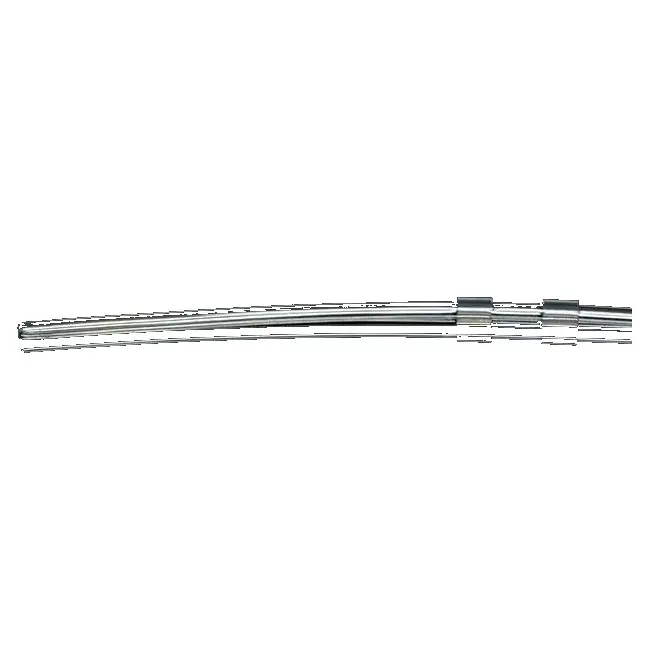
- Pre-assembled to body weight — insertion length and collar position are set at manufacture for each target weight range — no intraoperative measurement required, reducing surgical time and positioning error
- Rounded tip for long-term patency — rounded polyurethane tip minimises vessel wall trauma on insertion and reduces fibrin sheath formation — a key factor in patency extending to months rather than weeks
- Full access site coverage — mouse and rat catheters available for all major vascular sites (jugular, femoral, carotid) and specialty applications (bile duct, intrathecal, portal, gastric)
- 3Rs Refinement via closed VAB system — VAB-connected catheters enable group housing of catheterised rodents — AstraZeneca data shows 22% more usable catheterised animals versus exteriorised tether systems, and up to 5x longer catheter lifespan
Overview
Instech mouse catheters cover four access sites: jugular vein, femoral vein and artery, carotid artery, and tail vein. All implanted catheters use medical-grade polyurethane tubing — the only material Instech recommends for subcutaneous vascular access — sized from 1Fr (0.36 mm OD) for the smallest femoral vessels to 2Fr (0.69 mm OD) for jugular and carotid access. Each catheter is ordered by target body weight, with the silicone anchoring collar pre-positioned at the correct insertion length. Mouse catheters connect to 25ga Vascular Access Buttons (VABs) or 25ga PinPorts.
Rat catheters span eight access sites. The jugular vein is the most commonly implanted vessel — the right jugular provides a direct route to the right atrium, and catheter tip position at the atrial entrance is the single most important determinant of long-term patency. Femoral vein catheters connect to the inferior vena cava and serve as an alternative when the jugular has been used or compromised. Carotid and femoral artery catheters provide arterial access for blood pressure monitoring and sampling without cardiac catheterisation. Specialty sites — bile duct, portal vein, gastric, and intrathecal — support metabolic, hepatic, and CNS study designs. Rat catheters connect to 22ga VABs or 22ga PinPorts.
Long-term catheter patency depends on five factors: tip position at the target vessel; a closed VAB system rather than an exteriorised catheter; rounded tip profile to minimise vessel trauma; sterile flush and lock solutions; and positive-pressure locking technique. When all five are followed, published data shows rat femoral vein catheters maintaining 94% bi-directional patency at five months, with animals group-housed between dosing sessions. Dual-channel access — enabling simultaneous infusion and blood sampling — is achieved via two-channel or multi-channel VABs connecting separate catheter implants. Walker Scientific supplies the complete Instech catheter range with local support across Australia, New Zealand, and Africa.
Key Features
- Mouse catheters: jugular vein (2Fr PU, 25ga), carotid artery (1-2Fr PU), femoral vein/artery (1-2Fr PU), tail vein cannula
- Rat catheters: jugular vein, femoral vein/artery, carotid artery, bile duct, portal vein, gastric, intrathecal (32ga), tail vein cannula
- Pre-assembled to body weight — silicone anchoring collar pre-positioned at correct insertion length
- Rounded tip profile — reduces vessel wall trauma and fibrin sheath formation for long-term patency
- Medical-grade polyurethane construction — biocompatible, kink-resistant, precision-extruded for 22ga and 25ga device connections
- Rat intrathecal catheter — 32ga (0.8Fr) PU with PTFE-coated stylet, gold standard for lumbar subarachnoid access
- Bile duct catheters — dual-purpose design cannulates both bile duct and duodenum via a single implant
- Compatible with Instech VABs (1–4 channel), PinPorts (22ga, 25ga, 28ga), tether and swivel systems
- EtO-sterilised packaging available for GLP and regulatory studies
- Raw tubing (PU, PE, silicone) and custom configurations available on request
Typical Applications
- Intravenous drug infusion and continuous dosing via jugular or femoral catheter
- Serial blood sampling for pharmacokinetic and toxicokinetic studies
- Arterial blood pressure monitoring and arterial blood sampling
- Glucose clamp and metabolic studies requiring simultaneous infusion and sampling
- Bile sampling and enterohepatic circulation studies via bile duct cannulation
- First-pass metabolism studies via portal vein access
- CNS and pain research via intrathecal drug delivery
- Chronic vascular access studies with group-housed rodents via VAB system
Specifications
| Species | Mice and rats |
|---|---|
| Primary material | Medical-grade polyurethane (PU) — recommended for all implanted segments |
| Tubing sizes | 0.8Fr (0.13 × 0.25 mm), 1Fr (0.18 × 0.36 mm), 2Fr (0.43 × 0.69 mm), 3Fr (0.64 × 1.0 mm) |
| Mouse access sites | Jugular vein, carotid artery, femoral vein, femoral artery, tail vein |
| Rat access sites | Jugular vein, femoral vein, femoral artery, carotid artery, bile duct, portal vein, gastric, intrathecal, tail vein |
| Anchoring | Silicone collar pre-positioned at insertion length for each body weight variant |
| Hub connection | 22ga or 25ga luer stub, PinPort (needle-free), or VAB-integrated |
| Device compatibility | Instech VABs (1–4 channel, 22ga and 25ga), PinPorts, tether and swivel systems |
| Sterilisation | EtO sterilised; sealed packaging available for GLP studies |
| Dead volume (approx.) | 1Fr: 0.3 µL/cm — 2Fr: 1.5 µL/cm — 3Fr: 3.0 µL/cm |
| Lock solution maintenance | Every 7 days (closed VAB); every 3–4 days (exteriorised PinPort) |
Which catheter configuration do you need?
Catheter selection depends on species, access site, and study design. Use this guide to identify the right starting point, then contact Walker Scientific for body-weight-specific part numbers.
- Jugular vein — most common first implant; tip positioned at right atrial entrance
- Carotid artery — arterial access; direct route from left carotid to aortic arch
- Femoral vein/artery — alternative when jugular is unavailable; 1Fr tip for small vessels
- Tail vein cannula — short-term access only; 29ga stainless steel, not chronically implanted
- Jugular vein — preferred for most IV infusion and blood sampling studies
- Femoral vein/artery — venous or arterial access at the inguinal site
- Carotid artery — arterial access; use left carotid for direct aortic arch route
- Bile duct — dual-purpose catheter for bile duct + duodenum cannulation
- Intrathecal — 32ga PU with stylet; gold standard for lumbar subarachnoid delivery
- Portal vein / gastric — for first-pass metabolism and gastric studies
- Two separate catheters (e.g. jugular + femoral) connect to a 2-channel VAB
- Enables simultaneous IV infusion and arterial blood sampling without restraint
- Essential for glucose clamp, PK/PD, and toxicology studies requiring concurrent dosing and sampling
- Rat 3- and 4-channel VABs support bile duct + duodenum + vascular access in a single implant
Need help selecting the correct catheter and insertion length for your study? Contact Walker Scientific — we'll recommend the right configuration for your species and body weight.
Frequently Asked Questions
When should I use jugular vein versus femoral vein access?
The jugular vein is the most common starting point for chronic vascular access in both mice and rats. The right jugular vein provides the most direct route to the right atrium — where tip position is critical for long-term patency. The femoral vein is preferred when the jugular has already been used or surgically compromised, or when study design requires bilateral access. Femoral access is technically more demanding than jugular but allows the same IV infusion and blood sampling applications. For arterial access, the carotid is the primary site in rats (use the left carotid for a direct route to the aortic arch); the femoral artery is an alternative that avoids neck dissection.
How do I select the correct insertion length?
Instech catheters are ordered by body weight, with the silicone anchoring collar pre-positioned at the correct insertion length for each weight range. For jugular vein catheters, insertion length is measured from the vessel entry point to the entrance of the right atrium — this varies by 1–2 mm across the standard weight ranges. For rat jugular catheters (Instech/Lapierre procedure), the tip is positioned 5 mm from the clavicle. Selecting the wrong length by even 1 mm can affect patency and pharmacokinetic data, so ordering by specific body weight is essential. Contact Walker Scientific with your target body weight range for the correct part number.
What catheter material should I use?
Medical-grade polyurethane (PU) is the material of choice for all implanted vascular catheter segments. PU is biocompatible, kink-resistant, stretches to grip connectors reliably, and is specially extruded by Instech to fit 22ga (3Fr) and 25ga (2Fr) device connections precisely. Silicone is used only for anchoring collars and high-pressure connection sleeves — not as an implanted catheter body, as it is too permeable for subcutaneous use. Polyethylene (PE) is used only for external infusion tubing or the transition segment of intrathecal catheters, not for implanted vascular catheters.
What is the difference between a VAB and a PinPort?
Both use Instech's needle-free PinPort septum technology, but they serve different purposes. A Vascular Access Button (VAB) is a subcutaneous implant — a small port placed under the skin in the interscapular region, connected to the implanted catheter. The button is accessed transcutaneously with a PinPort injector, enabling dosing and sampling without restraint or anaesthesia. VABs support group housing of catheterised rodents and provide significantly longer catheter patency than exteriorised systems. A PinPort is a standalone inline connector for an exteriorised catheter — the tubing exits the skin and the PinPort at the end is accessed manually. PinPorts suit short-term or intermittent access; VABs suit chronic studies and improved animal welfare.
How long can catheters remain patent in vivo?
With proper technique and maintenance, Instech catheters can maintain patency for months. Published data from Charles River shows 94% bi-directional patency of rat femoral vein catheters at 151 days (five months), with animals flushed only every two weeks. Five factors determine long-term patency: correct tip position, a closed VAB system, rounded catheter tip, sterile flush and lock solutions, and positive-pressure locking technique. VAB-connected catheters demonstrate up to five times longer patency than exteriorised catheters. Maintenance involves flushing with heparinised saline every 7 days for closed VAB systems, or every 3–4 days for exteriorised PinPort catheters.
What is the intrathecal catheter used for?
The Instech rat intrathecal catheter uses 32ga (0.8Fr) polyurethane tubing — among the smallest catheter tubing available — to access the lumbar subarachnoid space for direct CNS drug delivery. It includes a PTFE-coated stainless steel stylet for placement guidance. The catheter is described as the gold standard for intrathecal injections in rats and is referenced in published studies on pain research, neuraxial pharmacology, and CNS drug delivery. The fine polyurethane tip transitions to a PE segment that connects to a luer stub, PinPort, or VAB.
Related Products
Related Articles
Ready to discuss the Vascular Catheters?
Talk to our team about specifications, pricing, and availability for your application.